
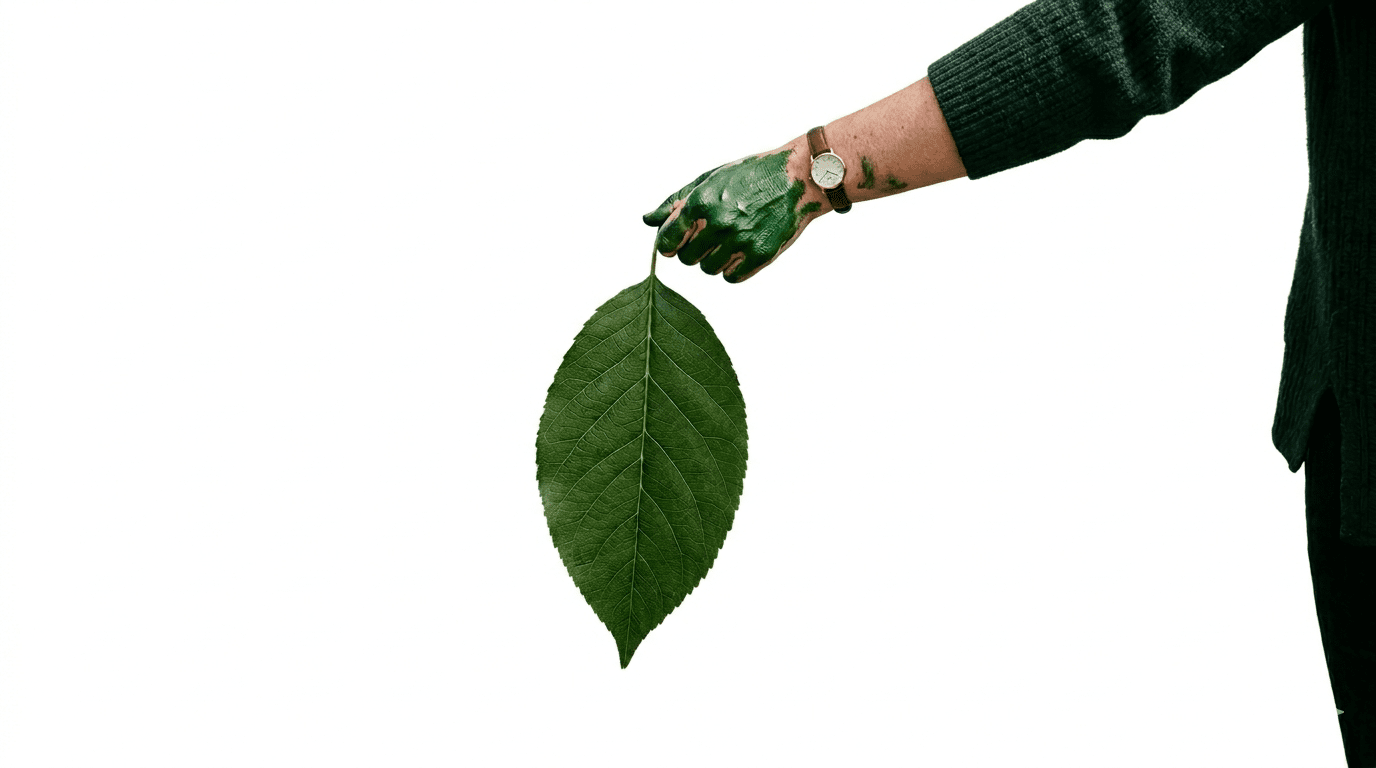
We’ve all seen it. The brand with a lush green logo, earthy tones on the packaging, and a homepage that’s 80% rainforest imagery but when you dig a little deeper into their supply chain, the picture isn’t quite so verdant.
Greenwashing has been one of the biggest problems in brand communications for years: the EU discovered that the majority of eco-claims in the Bloc are at best vague and at worst downright misleading ― and now it’s had enough.
Enter the Empowering Consumers for the Green Transition Directive. It’s fully enforceable from 27 September 2026 ― so it’s coming sooner rather than later.
The ECGT’s basic premise is very simple: if a brand makes environmental and/or sustainability claims, it now has to prove them it. The burden of proof has shifted firmly onto brands. Let’s break it down what it is, what it bans, what it means for your communications strategy, and how to stay on the right side of it.
ECGT’s no nonsense approach to the environment and sustainability
The ECGT outright bans some practices that we’ve all become familiar with. Directive casualties include:
- Words and phrases such as ‘eco-friendly’, ‘planet kind’, ‘natural’, ‘sustainable’ and ‘green’ are banned ― unless proven with hard data.
- Claims of carbon neutrality through carbon credits or tree planting are banned. Only direct carbon reductions matter.
- Unverified green badges or labels are no longer allowed ― only those granted by either a government body or accredited third-party organisation.
- Bans on green claims for products or services that only partially qualify (e.g. products using plant-based ingredients but also damaging chemicals).
- Bans on offering something that’s already a legal requirement (e.g. a cleaner claiming to be ‘Triclosan-free’ when this is an already prohibited substance).
It appears that some claims in formal sustainability reports, such as those required by the CSRD, might be out of ECGT scope. Remember, though, that CSRD reporting must be fully audited anyway. And…the moment any unsubstantiated claims migrate from reports into blogs, social posts, web copy and all other publicly facing materials, the ECGT is back in the game.
Brand alert ― the need to be ECGT aware
First up, all companies that do business in the EU are subject to the ECGT from September, no matter where they’re headquartered.
Next, the ECGT isn’t retrospective but if claims remain in the marketplace, they may be in scope (e.g. old info still accessible from a website) ― so brands might want to audit their externally focused communications.
Another crease is that the ECGT also allows a company’s competitors to sue if they see it greenwashing ― so there will be plenty of eyeballs on every brand.
The consequences of getting this wrong will see unsubstantiated green claims plunge brands into the red, with fines of up to 4% of global revenue. Then, there’s the reputational risk as breaches kill consumer trust.
Trust, not taglines ― what brands can do now and next
The ECGT shouldn’t scare brands off from making environmental claims, rather ensure that environmental and sustainability stories are authentic and provable. In terms of next steps:
- Audit environmental language. Go through every touchpoint: website copy, packaging, social channels, advertising, press releases and campaign materials. Map every environmental claim and ask: can this be backed up with specific, verifiable data? If the answer is “not yet” or “sort of,” that language needs to change. Milk & Honey can help, here.help do this for you.
- Be specific. Instead of “eco-friendly packaging,” try “our packaging is made from certified 85% post-consumer recycled materials.” Specific, attributable, defensible. That’s the new standard. Vagueness is risk.
- Validate. Third-party validation isn’t optional anymore — it’s the price of entry. Whether that’s the EU Ecolabel, GOTS, Oeko-Tex, B Corp, or another recognised certification body, independent verification is the difference between a claim that flies and one that gets your brand into regulatory hot water.
- Rethink the carbon narrative. If sustainability stories rely on offset-based carbon neutrality claims, now is the time to change them. Talk about your actual emission reduction trajectory. Talk about the investments you’re making. Be transparent. It also doesn’t mean killing off funding for tree planting schemes ― they just need to be described differently.
- Train your teams. Sustainability claims are no longer just the concern of the marketing or ESG teams. Legal, PR, social media, sales. Everyone who produces or approves external communications needs to understand the new landscape.
Third-party ECGT friends
We talk about this at Milk & Honey PR from lived experience as well as professional conviction. We are a B Corp certified agency, and we’ve recently completed our second reaccreditation. The B Corp certification process is rigorous, it assesses your business across environmental performance, worker practices, community impact and governance.
It’s not a badge you design yourself. It requires independent assessment against a comprehensive global standard and it needs to be renewed. That process of accountability is precisely what gives it meaning for us, our clients and their audiences.
Third-party accreditations are your friends. They matter because they convert an internal assertion into an external fact. It gives media, consumers, investors and regulators something they can look up, verify and trust. In the post-ECGT landscape, if your sustainability credentials aren’t independently certified, they’re likely not communicable ― certainly not safely.
The ECGT is opportunity
Milk & Honey sees the ECGT as something that gives rather than takes away. For the first time, the companies that have run the hard yards can stand apart from those that simply go through the motions. Further, companies that have seen the environment and sustainability as a marketing strategy now have a strict framework around which they can build authentic, meaningful actions.
For almost a decade, Milk & Honey PR has helped purpose-led brands tell their sustainability stories in ways that are compelling, credible and compliant. Whether you need a communications audit, support repositioning your environmental narrative, or help building a certification strategy that gives your claims the independent backing they need, we’re here for it.
The era of eco-friendly as a vibe is over. The era of accountability is here. And honestly? We’re glad.
Milk & Honey PR is a B Corp certified international communications agency network, with offices in London, New York, San Francisco, Munich and Singapore. Our B Corp reaccreditation reflects our ongoing commitment to meeting rigorous standards of social and environmental performance, transparency, and accountability.
Want to talk through your sustainability communications strategy ahead of the September 2026 ECGT deadline? Get in touch.